

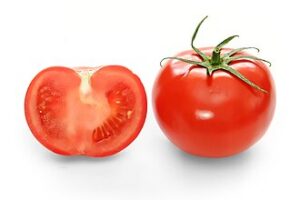
“Knowledge is knowing that a tomato is a fruit. Wisdom is knowing not to put it in a fruit salad.” — Brian O’Driscoll, Rugby Player
Botanically, the tomato is a fruit. According to botanists at the New York Botanical Garden, fruits are usually sweet and eaten as a dessert.
In contrast, vegetables are savory and usually eaten as part of a main course.
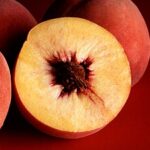
More technically, a fruit is the edible ovary of a plant. The ovary protects the reproductive part of the plant from its youngest stage in developing a flower until seeds develop.
Common fruits include stone fruits like peaches, apricots, and plums. Bananas are among the most popular fruits in the world. Berries of all kinds and dragon fruit are also fruits. And tomatoes, the focus of this blog, are a fruit containing seeds.
How Tomatoes Became Vegetables
In the early 19th century, plantation agriculture in the American South grew tomatoes as well as other agricultural products. Southern growers shipped their tomatoes to market in the northern states until 1860 when civil war broke out between the northern and southern states.
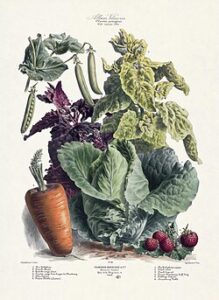
During the war, northern merchants sourced tomatoes from the Caribbean. After the war ended in 1865, southern farmers wanted to re-establish their business exporting tomatoes and other vegetables to northern markets. So, they lobbied Congress for a 10 percent tariff on all vegetables imported from outside the United States, resulting in the Tariff Act of March 3, 1883 which imposed the tariff on “vegetables in their natural state, or in salt, or brine.”
Not so fast, importers John Nix & Co. argued. The same act also listed food imports not subject to the tariff, I.e., “fruits, green, ripe, or dried.” Nix & Co argued the tariff didn’t apply to tomatoes, because the tomato was a fruit.
John Nix & Co were among the first merchants to source produce from Florida, California, and Bermuda. At one time the company chartered a steamship to bring onions to market more quickly. Nix & Co. exported fruit to Europe and returned with potatoes.
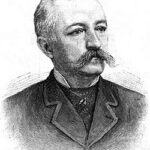
Nix v. Hedden, 149 U.S. 304
On February 4, 1887 John Nix & Co. filed suit against Edward L. Hedden, Collector of the Port of New York to recover back tariff duties paid under protest for tomatoes imported from the West Indies in the spring of 1886.
The plaintiffs read dictionary definitions for the words ‘fruit’ and ‘vegetable.’ They also called two witnesses who had been selling fruit and vegetables for 30 years and asked them whether the words ‘fruit’ or ‘vegetable’ had any meaning in trade that differed from the dictionary definitions.
Neither thought the words had any special meaning in trade or commerce.
The defendant’s attorney read definitions of the words pea, egg plant, cucumber, squash and pepper.
Nix’s attorney countered with definitions of potato, turnip, parsnip, cauliflower, cabbage, carrot, and bean.
The defendant’s attorney requested the court to direct a verdict in favor of the defendant, and the court agreed.
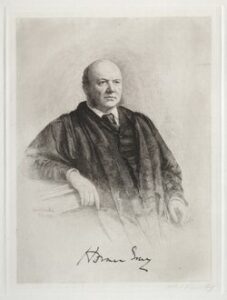
Justice Horace Gray, delivering the opinion of the court, concluded that since the words fruit and vegetable had no special meaning in trade or commerce, they must have their ordinary meaning.
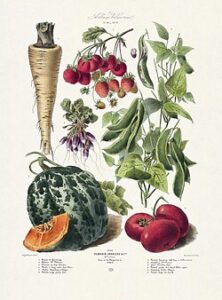
Botanically, he said, tomatoes were a fruit of a vine, like a cucumber or a squash. But in the common language of the people, tomatoes were vegetables, eaten the same way as potatoes, cabbage, or celery at dinner, and not as a dessert when fruit was more generally eaten.
And that is how a fruit became a vegetable, and southern farmers once again supplied tomatoes to vegetable markets in the northern states.
🍅 🍅 🍅
Illustrations & A Few Sources
Bright red tomato & cross-section of another tomato, Fir0002/Flagstaffotos; Autumn red peach; from Vilmorin-Andrieux & Co.; Edward L. Hedden; Horace Gray; from Vilmorin-Andrieux & Co. Lawrence M. Kelly. “What is a Fruit?” New York Botanical Garden. Aug. 6, 2014. “The Tomato Conundrum: How a Supreme Court Case Redefined Fruits & Vegetables.” The Holcomb Group.
If you would like to be notified about out my blogs as they appear, sign up for my newsletter. In addition to the link to my latest blog, the newsletter includes news about my writing and publishing.