

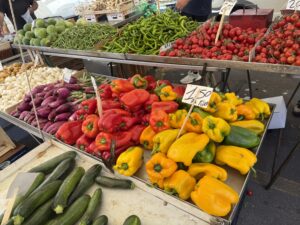
Food was an important part of my travel tour in southern Italy and Sicily, so it’s only fitting to complete my vacation memories with a few stories about Italian cuisine.
I’m always up for a visit to the local outdoor market. The one in Locorotondo was especially enticing. Among the offerings were fresh figs, a treat I seldom enjoy. We also visited several sites directly related to well-known Italian foods which gave my palate a new appreciation for these unique flavors.
Buffalo Mozzarella
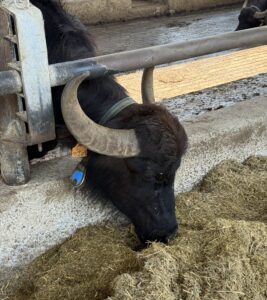
I was already familiar with mozzarella cheese, and often purchased it from the deli section of my local grocery store. Before visiting Italy, however, I had never tasted fresh mozzarella, a totally different experience. I also didn’t know about buffalo mozzarella until visiting a production center for this unique cheese from Campania.
Buffalo milk has double the fat content of cow’s milk, which gives the cheese a creamier taste. Arabs introduced water buffalo to Sicily during their conquest of the island, and the Normans brought the beasts into Compania. At the end of World War II, departing German soldiers destroyed most of the buffalo herds. During the post war years, farmers introduced water buffalo from India to restart the industry.
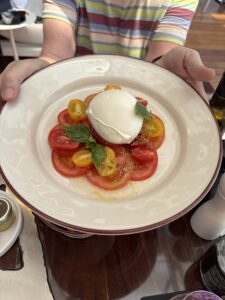
The first buffalo mozzarella is dated to the 13th century when dairy farmers began using buffalo milk as a less expensive alternative to cow’s or goat’s milk. Today about 33,000 pounds of buffalo mozzarella are produced annually in the €300 million industry.
Caprese Salad, named after the island of Capri, is a simple and popular dish during the summer months. Ingredients are sliced fresh mozzarella cheese, sliced tomatoes, extra virgin olive oil, and salt. A perfect light meal for a hot summer’s day.
Olive Oil Tasting
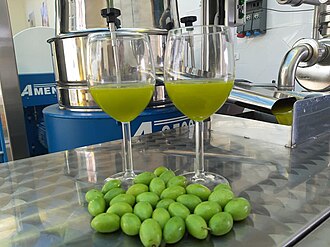
One of our more interesting activities was an olive oil tasting. Not being a discerning cook, it had never occurred to me that there was enough of a difference between olive oils to have tasting events, much like wine tasting.
We visited the Il Frantolio D’Amico organic olive oil estate in Cisternino in the Itria Valley of Puglia where the D’Amico family has been producing olive oil since 1917. Olives on the estate are harvested by hand from October thru December, and the oil is cold extracted shortly after harvest.
Extracting olive oil involves washing the olives which are then crushed, including the pits, into a paste. The paste is then pressed in a hydraulic press to separate the oil from the solid elements of pulmonary and pits.
Sorrento Lemons
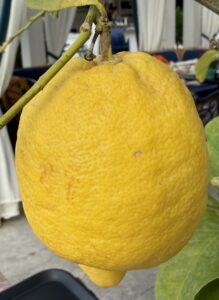
Sorrento lemons are an Italian variety of lemon native to the Sorrento peninsula. Travelers on the Silk Road introduced the fruit, and the Romans cultivated lemon groves.
Sorrento lemons are quite large compared to lemons I’d seen before. They are the size of grapefruits with a thick, bumpy rind. The lemons themselves are highly acidic. The trees grow in protected terraces on the coastal mountain sides and produce fruit about four times a year.
Limoncello Recipe
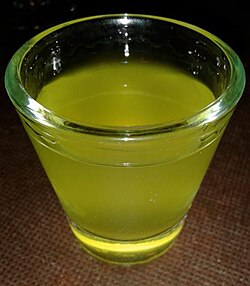
We visited the Sorrento Lemon Farm established by the Ruoppo family in the early 19th century. Their recipe for two liters of Limoncello, a refreshing citrus alcoholic beverage is as follows:
- 6 ripe lemons
- 1 liter – 95% alcohol
- 1 liter water
- 700 grams sugar
- bottles with caps
- a funnel with a gauze filter
- Wash & dry the lemons
- Pour the alcohol into a glass bottle
- Remove only the yellow part of the lemon rinds. Add to bottle with alcohol. Shake vigorously.
- Put the bottle in a cupboard for seven days – shake it occasionally
- Then put sugar and water in a pot and cook the mixture until a syrup forms.
- Let syrup cool.
- Take the bottle out of the cupboard and pour the liquid, but not the rind, into a pot
- Add syrup and mix well.
- Pour contents through the funnel with the gauze filter into the bottles, and cap tightly
- Put the limoncello back into the cupboard for 20 days.
- Now you can drink it. Serve chilled.
🍋 🍋 🍋
Illustrations & A Few Sources
Market at Locorotondo, Photo by Author; water buffalo, Photo by Author; Author holding Caprese Salad; extra virgin olive oil from a mill in southern Italy by Amending. Sorrento Lemon, Photo by Author; shot glass filled with limoncello by FakirNL. Rudolfo Morais. “The History of Buffalo Mozzarella.” Grapes & Grains. Oct. 1, 2017. Il Frantolio D’Amico Sovrano di Trisole. Sorrento Lemon Farm.
If you would like to be notified about out my blogs as they appear, sign up for my newsletter. In addition to the link to my latest blog, the newsletter includes news about my writing and publishing.